Kitchen Design and Space Planning in Long Beach CA
Smart kitchen design goes beyond selecting beautiful cabinets and countertops – it requires understanding the critical work triangle between sink, stove, and refrigerator while incorporating adequate storage solutions, proper lighting design, and efficient traffic flow patterns. At Long Beach Elite Kitchen & Bathroom Remodeling, we specialize in creating ergonomic layouts that balance aesthetic appeal with practical functionality, whether you're working with a compact galley configuration or an expansive open-concept space that needs defined zones for cooking, dining, and socializing.
Our comprehensive approach to kitchen space planning considers every detail from appliance placement and island positioning to specialized features like pantry organization systems and pull-out drawers by brands like Rev-A-Shelf and Hafele. We utilize advanced 3D rendering software including Chief Architect and 2020 Design to visualize your renovated space before construction begins, ensuring optimal clearances, proper ventilation requirements, and seamless integration of modern conveniences like charging stations and task lighting throughout your Long Beach kitchen transformation.
Kitchen Design Services
Our kitchen design services transform how you use and experience your cooking space through thoughtful planning, material selection, and storage optimization. Each project balances functionality with aesthetic appeal to create a kitchen that works for your lifestyle.
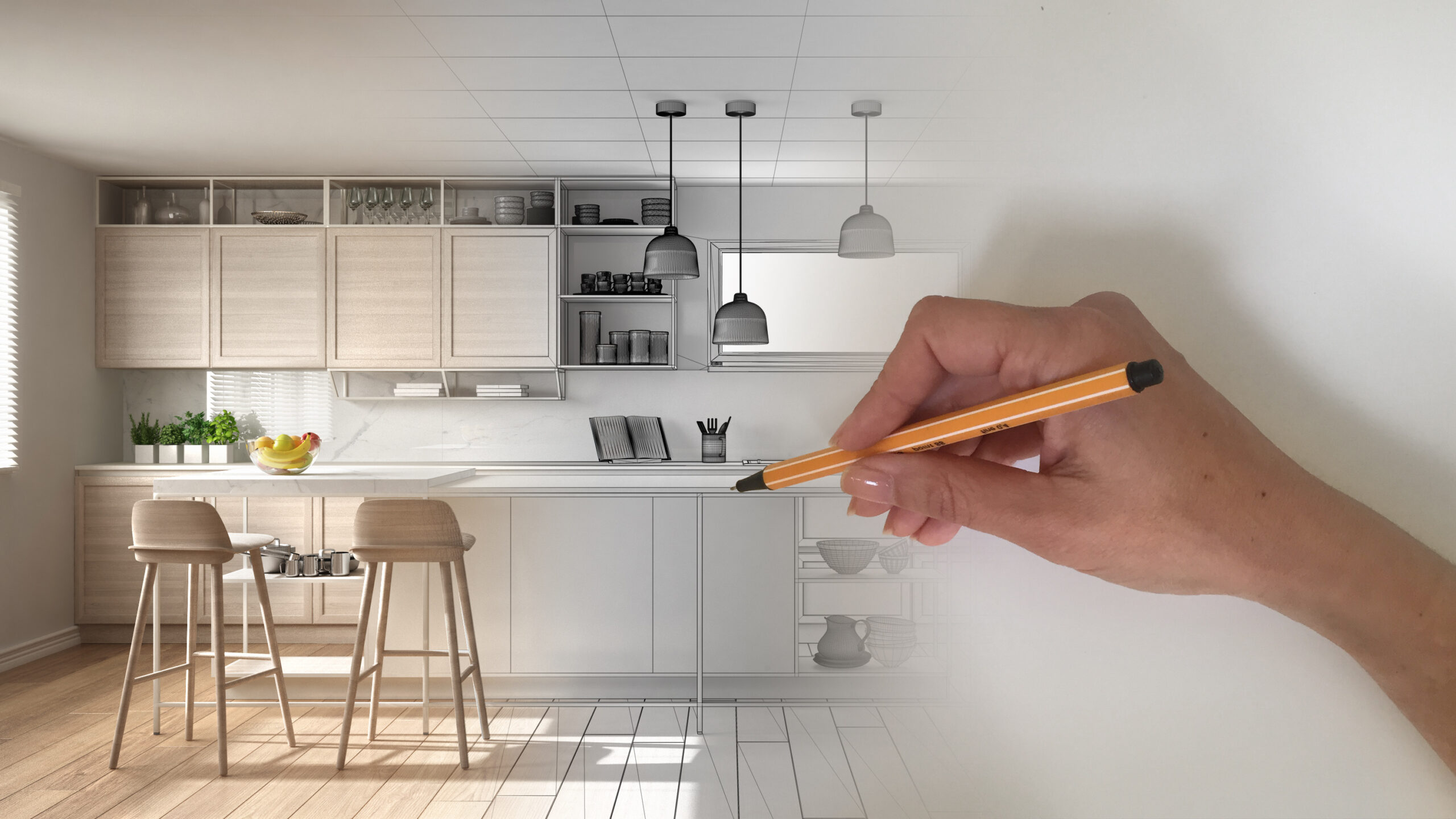
Custom Kitchen Layouts
We analyze your existing space to develop layouts that improve traffic flow and maximize usability. Our team considers the classic work triangle between sink, stove, and refrigerator while adapting to modern cooking habits and household needs.
Floor plans account for door swings, appliance clearances, and counter workspace. We map out where you prep food, cook meals, and clean dishes to position each element efficiently. The layout accommodates multiple cooks when needed and creates distinct zones for different tasks.
Common layout styles we implement:
- L-shaped for open floor plans with dining areas
- U-shaped for enclosed spaces needing maximum counter space
- Galley for narrow kitchens requiring efficient workflows
- Island configurations for additional prep space and seating
We take measurements onsite and create detailed drawings that show exact dimensions and fixture placements. Your input guides decisions about which features matter most for daily use.
Cabinet and Storage Solutions
Cabinet selection determines both the visual style and practical function of your kitchen. We source cabinets in various construction methods, from framed to frameless European styles, and match them to your budget and design preferences.
Storage planning goes beyond standard base and wall cabinets. We incorporate pull-out shelves, lazy Susans, drawer dividers, and pantry systems that keep items accessible. Specialized storage handles awkward corner spaces and accommodates oversized items like baking sheets or small appliances.
Our designers calculate the linear footage and depth needed based on what you own and how you cook. We position frequently used items within easy reach and designate spots for everything from spices to serving platters. Hardware choices include soft-close hinges and full-extension drawer slides for durability.
Countertop and Surface Selection
Countertop materials affect both appearance and maintenance requirements. We present options in granite, quartz, marble, butcher block, and solid surface materials with honest assessments of each material's durability and care needs.
Material comparison factors:
Material | Heat Resistance | Maintenance | Cost Range |
|---|---|---|---|
Granite | High | Periodic Sealing | Mid to High |
Quartz | Moderate | Minimal | Mid to High |
Butcher Block | Low | Regular oiling | Low to Mid |
Marble | Moderate | Frequent Sealing | High |
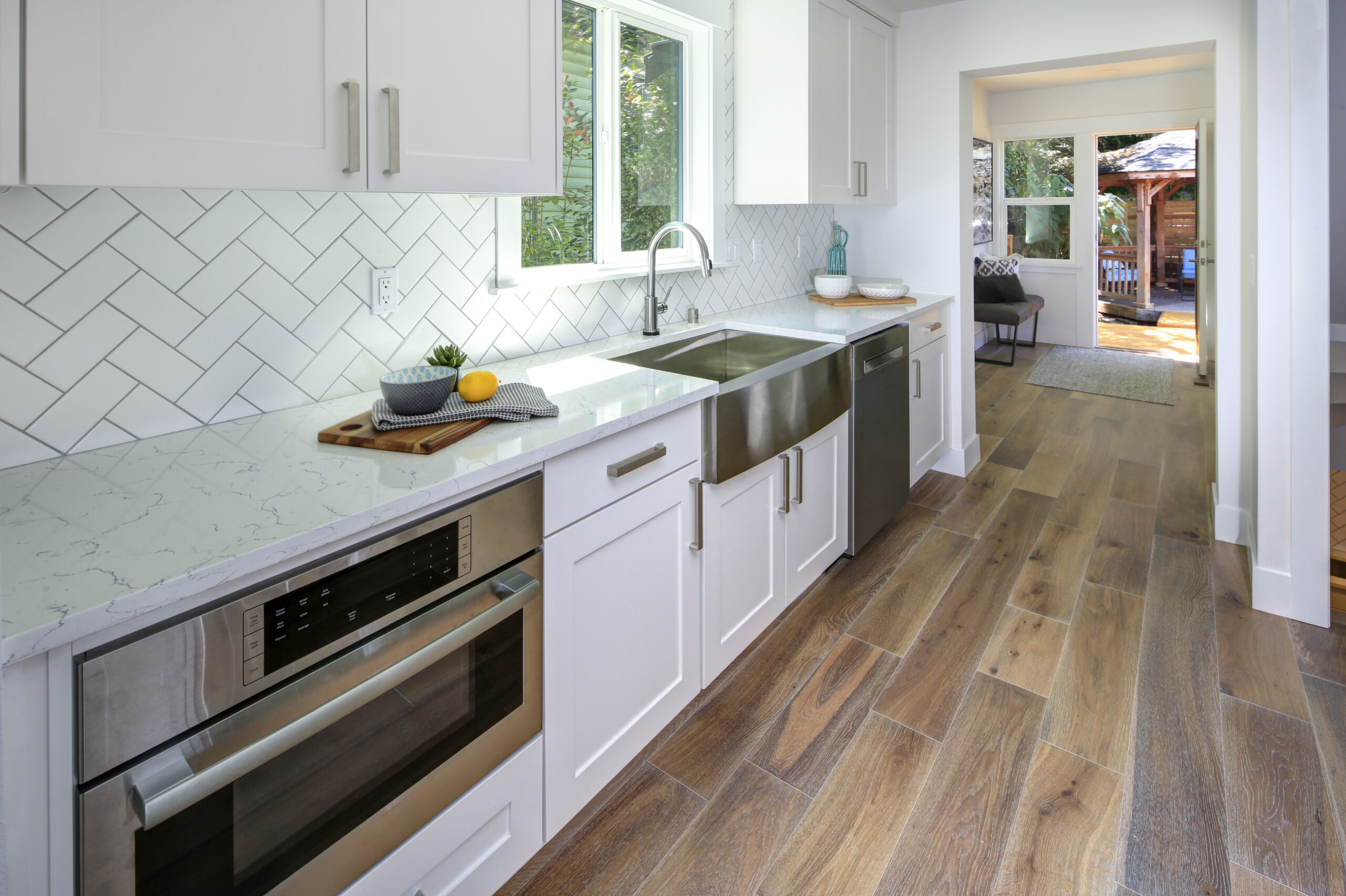
Space Planning for Kitchens
Effective kitchen space planning balances the physical layout of appliances and work surfaces with the practical needs of cooking, cleaning, and storage. The right approach accounts for workflow efficiency, spatial relationships, and the accessibility requirements of all users.
Maximizing Efficient Workflow
The work triangle principle connects the three primary activity zones: the refrigerator, sink, and cooking surface. We position these elements so that the total distance between all three points measures between 12 and 26 feet, with each leg of the triangle spanning 4 to 9 feet.
Counter space allocation matters significantly for food preparation and staging. We recommend at least 36 inches of continuous counter space for the main prep area, with 15 inches on one side of the cooking surface and 12 inches on the other. Landing zones near the refrigerator should provide 15 inches of clearance for unloading groceries.
Traffic patterns through the kitchen must not intersect the work triangle. We plan walkways with a minimum width of 42 inches to allow comfortable passage, though 48 inches works better in kitchens with multiple cooks.
Open Concept and Zoning Strategies
Open layouts require distinct functional zones even without physical walls. Islands and peninsulas serve as natural dividers that separate cooking activities from dining or living areas while maintaining visual connection.
Primary Kitchen Zones:
- Cooking zone (range, oven, microwave)
- Cleaning zone (sink, dishwasher)
- Storage zone (refrigerator, pantry)
- Prep zone (countertops, small appliances)
We create buffer zones between active cooking areas and social spaces to manage noise, heat, and cooking odors. Task-specific lighting helps define each zone while pendant fixtures over islands establish visual boundaries. The placement of taller cabinetry or open shelving units provides subtle separation without blocking sightlines.
Accessibility and Universal Design
Counter heights between 28 and 34 inches accommodate seated users and people of varying heights. We often incorporate multi-level counters or adjustable-height work surfaces in kitchen designs that serve diverse needs.
Clearance requirements for wheelchair access include 60-inch turning radiuses and 30 by 48-inch clear floor space at appliances. Side-opening ovens, front-control cooktops, and pull-out shelving reduce the need for reaching or bending. Cabinet hardware like D-pulls and lever handles require less grip strength than traditional knobs.
Touch-activated or motion-sensor faucets eliminate the need for manual operation. We position frequently used items in the universal reach range of 15 to 48 inches from the floor to minimize strain for all users.
Our Approach to Kitchen Remodeling

01
Initial Consultation Process
The first step in our kitchen remodeling process involves an in-depth meeting at your Long Beach home. During this visit, we measure the existing space, assess structural elements, and discuss your functional requirements and design preferences.
We ask specific questions about how you use your kitchen, including cooking habits, storage needs, and traffic patterns. This information helps us create a design that works for your lifestyle rather than following generic layouts.
Our team evaluates your current plumbing, electrical systems, and ventilation to identify any upgrades needed for your new design. We also discuss your timeline and budget constraints during this initial consultation. After gathering this information, we develop preliminary design concepts and provide a detailed estimate within one week of the consultation.
02
Material and Finish Selection
Once the design concept is approved, we guide you through our material selection process at our Long Beach showroom. You'll see physical samples of cabinetry, countertops, flooring, backsplash tiles, and hardware options.
We provide honest assessments of each material's durability, maintenance requirements, and cost implications. For countertops, we explain the differences between granite, quartz, marble, and other surfaces. Our cabinetry selection includes various wood species, finishes, and construction quality levels.
Common Material Categories:
- Cabinet materials and door styles
- Countertop surfaces
- Flooring options
- Backsplash tiles and panels
- Fixtures and hardware
- Lighting selections
We help you coordinate finishes to create a cohesive look while staying within your established budget.
03
Project Management and Communication
Our project manager coordinates all aspects of your kitchen remodel from demolition through final inspection. You receive a detailed project schedule that outlines each phase of work and the expected completion dates.
We assign a dedicated point of contact who updates you regularly on progress and addresses any questions. Our team schedules and supervises all subcontractors, orders materials with appropriate lead times, and ensures deliveries align with the construction schedule.
Daily site cleanup is standard practice on all our projects. If design adjustments become necessary during construction, we present options and pricing before proceeding. You have direct access to your project manager via phone and email throughout the remodeling process.
FAQs About Kitchen Design and Space Planning
Kitchen design and space planning typically ranges from $1,500 to $5,000 depending on project complexity and square footage. Basic design consultations start around $500, while comprehensive plans with 3D renderings, material specifications, and contractor-ready blueprints run higher. Commercial kitchen designs requiring health department compliance and equipment layouts generally cost more than residential projects.
Our professional consultation includes on-site measurements, workflow analysis, appliance placement recommendations, cabinet layout optimization, and preliminary sketches. We assess your electrical and plumbing requirements, discuss material options from brands like KraftMaid and Thermador, review storage solutions, and provide a detailed project scope. You'll receive a written summary with space planning recommendations and budget estimates for implementation.
The complete design process typically takes 2-4 weeks from initial consultation to final plans. Initial concepts and layouts are ready within 5-7 business days, followed by revision rounds based on your feedback. Complex commercial projects or homes requiring structural modifications may extend to 6 weeks. Rush service is available for time-sensitive projects needing faster turnaround.
Yes, we provide photorealistic 3D renderings using Chief Architect and AutoCAD software to help visualize your finished kitchen. These renderings show cabinet styles, countertop materials, backsplash designs, lighting placement, and appliance integration from multiple angles. You'll see exactly how granite countertops, tile work, and custom cabinetry will look before any construction begins.
We excel at maximizing existing footprints through smart storage solutions, corner cabinet optimization, and efficient work triangle design. However, we'll recommend removing non-load-bearing walls or relocating doorways when it significantly improves functionality and flow. Our designs balance your budget constraints with optimal space utilization, whether that means working within current dimensions or suggesting strategic structural modifications.

Contact Us:
Long Beach Elite Kitchen & Bathroom Remodeling
2847 E Spring St
Long Beach, CA 90806
562-553-8955